Economic Vulnerability Assessment
Exploring the financial challenges and opportunities that shape long-term community resilience.
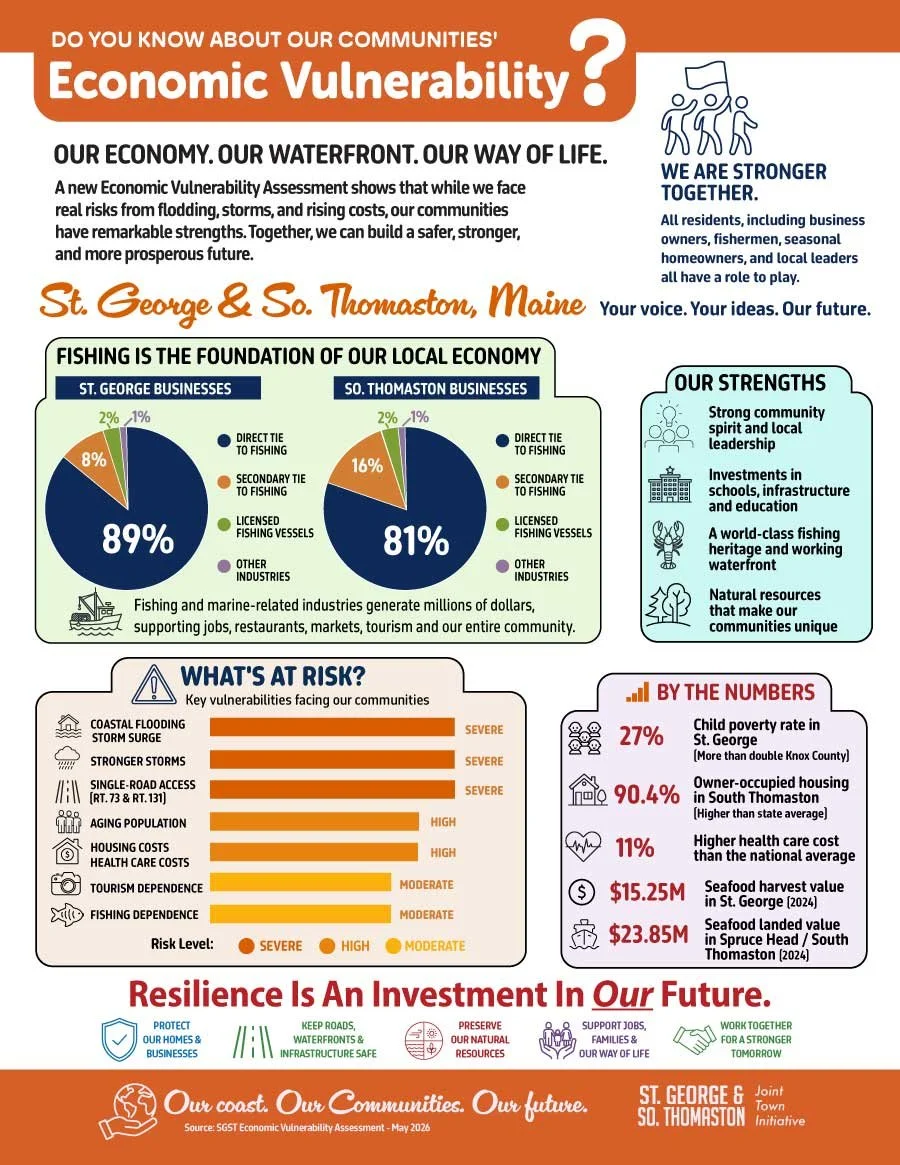
The communities of St. George and South Thomaston are facing a growing challenge: how to protect the working waterfronts, homes, businesses, roads, and natural resources that define life along the Maine coast. A new Economic Vulnerability Study reveals just how deeply the peninsula’s economy depends on the health and resilience of its coastal infrastructure. Fishing and marine-related industries account for more than 80% of the local economy in both communities, with St. George fishing ports generating more than $15 million annually in seafood landings and Spruce Head ranking among the top fishing ports in Maine with nearly $24 million in landed value. At the same time, the study highlights serious vulnerabilities, including increasing coastal flooding, storm surge risks, rising housing and healthcare costs, dependence on seasonal industries, and the reality that Route 73 and Route 131 serve as critical lifelines for emergency access, commerce, healthcare, and daily life.
But the report also delivers an encouraging message: with smart planning, infrastructure investment, and strong community engagement, our towns can become safer, stronger, and more economically resilient for generations to come. The study points to practical opportunities including protecting working waterfronts, strengthening roads and culverts against flooding, preserving wetlands that naturally reduce storm impacts, supporting local businesses, and preparing residents for future emergencies. Now is the time for all residents, including fishermen, business owners, educators, seasonal homeowners, and community organizations to come together and help shape the future of the peninsula. Resilience is not just about responding to climate impacts—it’s about protecting livelihoods, preserving the character and traditions of coastal Maine, and ensuring that St. George and South Thomaston remain vibrant, connected, and economically strong communities for decades to come.

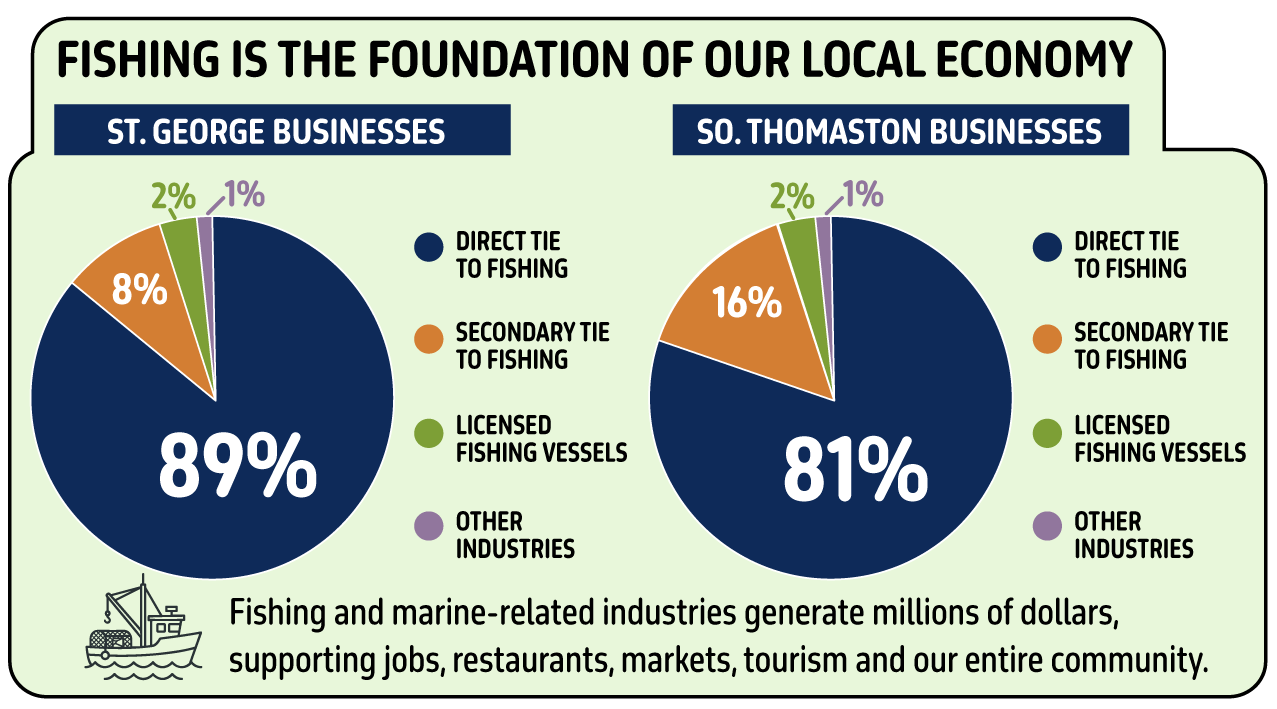
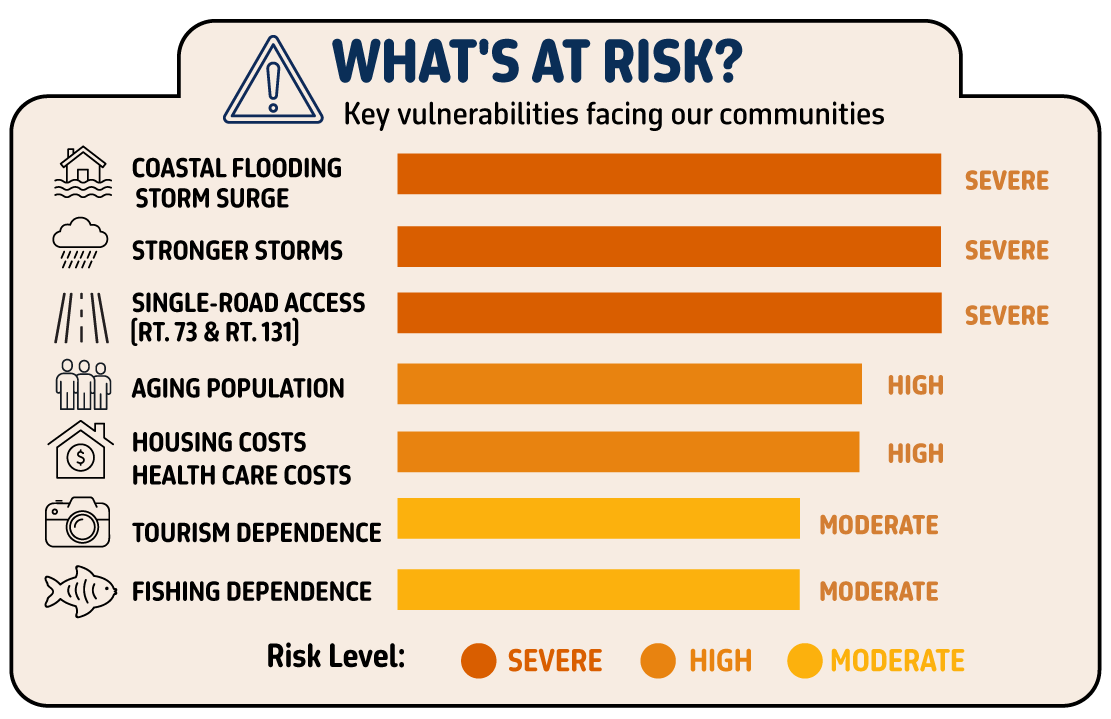
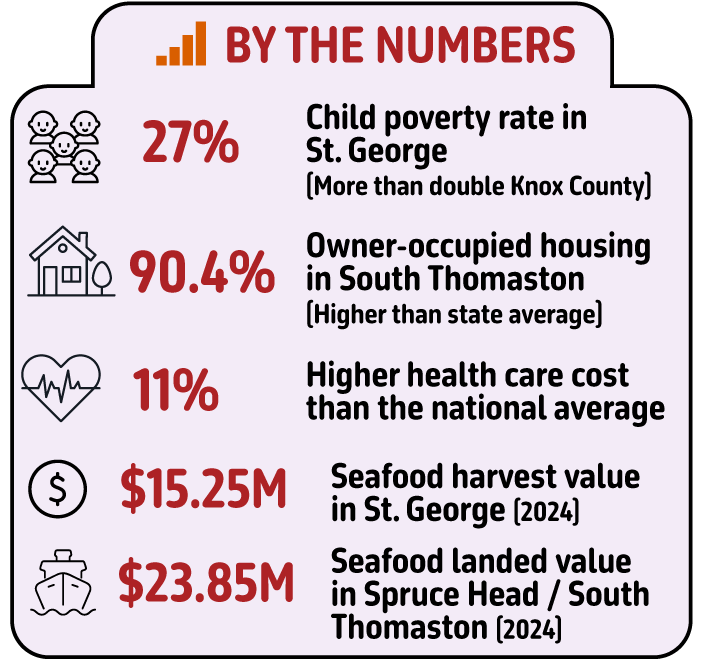
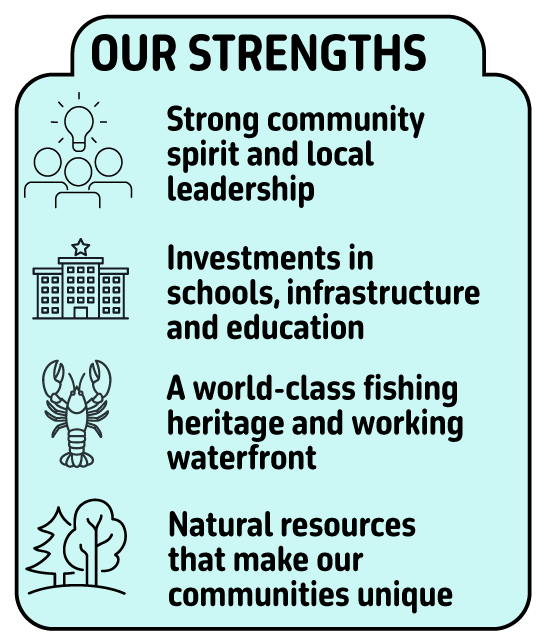

A new Economic Vulnerability Study for St. George and South Thomaston shows that more than 80% of our local economy is tied directly or indirectly to fishing and marine industries, making resilient roads, waterfronts, and infrastructure critical to our future. Rising seas, stronger storms, and aging infrastructure present growing challenges—but with smart planning and community involvement, we can protect the livelihoods, businesses, and coastal traditions that define our peninsula. Together, we can build a safer, stronger, and more economically secure future for generations to come.
Help Spread the Word
Building community resilience starts with shared understanding. Download this summary poster and share it with neighbors, friends, and organizations throughout St. George and South Thomaston.