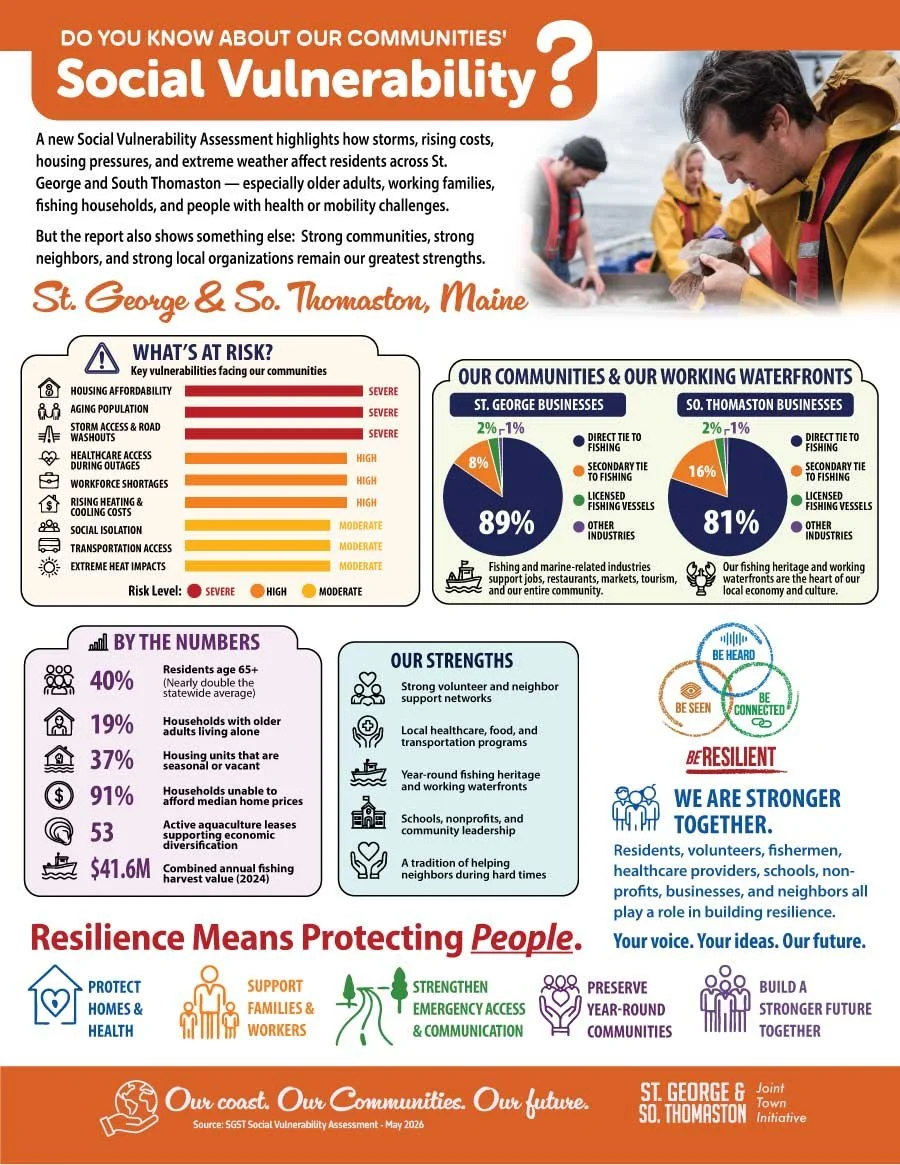
Social Vulnerability Assessment Summary
Highlighting the people, relationships, and community networks that strengthen resilience.
The Social Vulnerability Assessment provides a people-focused look at how climate change, severe weather, rising costs, and long-term demographic trends may impact the communities of St. George and South Thomaston.
While the towns compare favorably to statewide averages in several economic and health measures, the report identifies growing challenges that could affect long-term community resilience. Nearly 40% of residents are age 65 or older, many older adults live alone, housing costs continue to rise beyond the reach of many working families, and employers increasingly struggle to recruit and retain workers needed for healthcare, emergency services, schools, construction, and the working waterfront.
Contributors consistently identified older adults, fishing families, lower-income households, children, and residents with health or mobility limitations as populations most vulnerable to storms, flooding, outages, rising temperatures, and economic disruption. Concerns included emergency access during road washouts, power outages affecting medical equipment, rising heating and cooling costs, housing insecurity, and the increasing strain placed on volunteers and community service organizations.
The assessment also highlights significant community strengths. Residents pointed to strong local leadership, volunteerism, schools, healthcare providers, fishing traditions, nonprofits, food programs, and neighbor-to-neighbor support systems as critical assets. Community members emphasized that resilience means more than protecting infrastructure — it also means protecting people, preserving year-round communities, supporting local workers and families, and maintaining the social connections that make these towns strong.
The report outlines ideas for future resilience efforts, including:
Expanding cooling and warming centers
Supporting affordable workforce housing
Strengthening emergency communication and transportation networks
Helping residents weatherize and repair homes
Supporting healthcare, food, and ride-sharing programs
Investing in workforce development and volunteer recruitment
Improving outreach to isolated residents and working waterfront communities
Together, the findings will help shape a Community Resilience Plan focused on protecting health, safety, economic stability, and quality of life for future generations in St. George and South Thomaston.

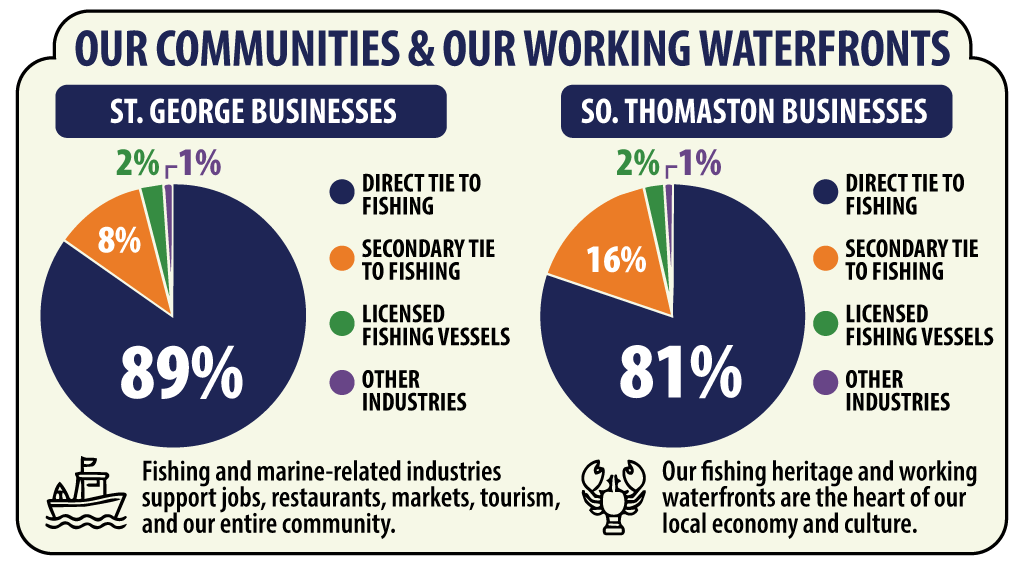
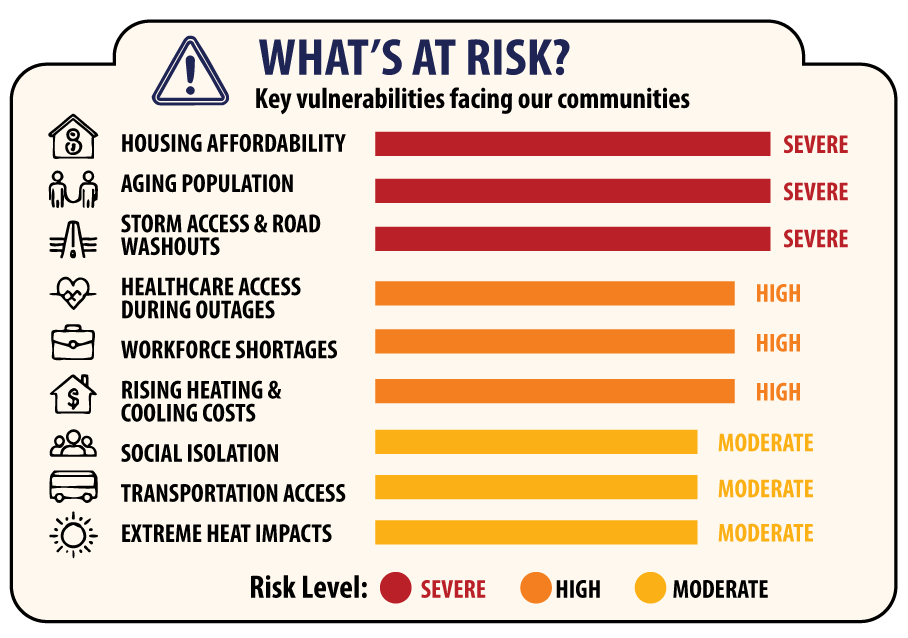
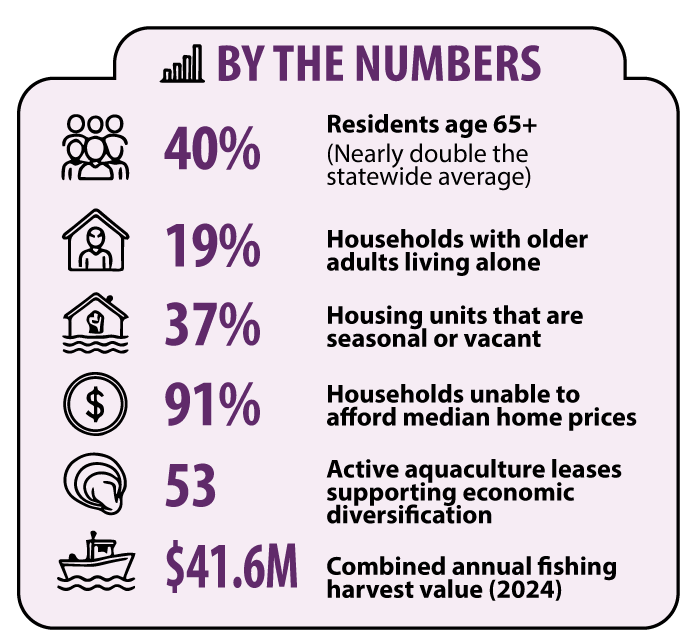
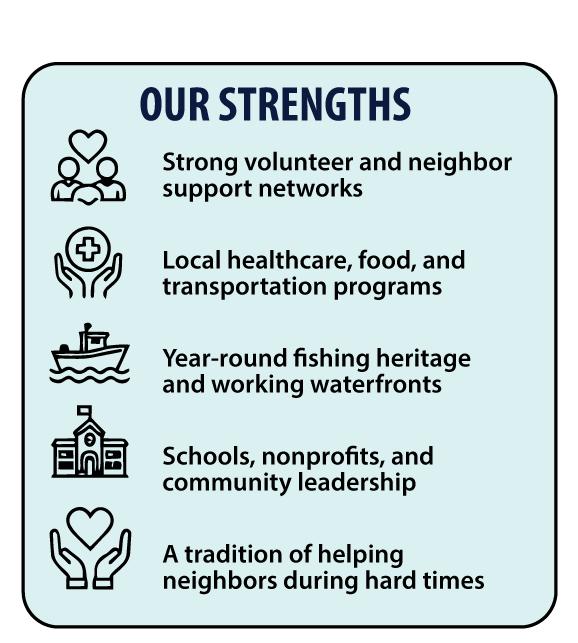


A new Social Vulnerability Assessment highlights how storms, rising costs, housing pressures, and extreme weather affect residents across St. George and South Thomaston — especially older adults, working families, fishing households, and people with health or mobility challenges.
But the report also shows something else:
Strong communities, strong neighbors, and strong local organizations remain our greatest strengths.
Help Spread the Word
Building community resilience starts with shared understanding. Download this summary poster and share it with neighbors, friends, and organizations throughout St. George and South Thomaston.